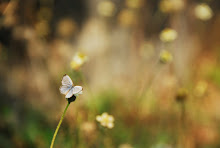
After the hotel stay next to the Royal Children's Hospital in Melbourne, we moved to an isolated and virtually traffic-free area, French Island.
The main attraction of this island is its serenity. Being two-thirds national park, French Island has a population of around 100, far outnumbered by their resident koalas.
We didn't camp this time. We stayed in an eco-friendly cabin which provided cosy dinner and basic facilities - minus hair dryer and wifi network.
So that's the bad news: you have to wait for your hair to dry. That's right. Waiting without net surfing.
Well, there are some pretty good alternatives.
Yikes.
The good news is that you can go outdoor stargazing before bedtime. Chances are you won't come back after your hair has been dry. Or even, in the blink of an eye, when it's frozen.
Thursday, October 22, 2015

Wednesday, October 21, 2015
Heart
Living right next to a hospital always ranks low when it comes to holiday. That's what we did in Melbourne during my daughter's term break. Our hotel is right next to the Royal Children's Hospital.
When I say "next to", I mean we shared the same elevator and car park. And I mean the hospital cafeteria is an integral part of our daily life. My daughter really appreciates this special place.
The Royal Children's Hospital, I must say, is a fabulous place for kids and visitors, especially those with a kid like our family. The hospital is surrounded by the 181-hectare Royal Park, the largest of Melbourne's inner city park. With the hospital's child-centric decoration (including a more-than-real size tiger behind the story The Tiger Who Came to Tea) and innovative design (with the ward location named after animals like kookaburra instead of those boring number and alphabets), this place is a showpiece for their love for children. Everything that happens to patients - the picture they see on the corridor, the playground they visit, the books they find at the convenience store - profoundly changes the way a hospital journey is perceived. And more so for children hospital journey.
The location of our hotel didn't really get off the beaten track, but it gets us to the heart of a place.
When I say "next to", I mean we shared the same elevator and car park. And I mean the hospital cafeteria is an integral part of our daily life. My daughter really appreciates this special place.
The Royal Children's Hospital, I must say, is a fabulous place for kids and visitors, especially those with a kid like our family. The hospital is surrounded by the 181-hectare Royal Park, the largest of Melbourne's inner city park. With the hospital's child-centric decoration (including a more-than-real size tiger behind the story The Tiger Who Came to Tea) and innovative design (with the ward location named after animals like kookaburra instead of those boring number and alphabets), this place is a showpiece for their love for children. Everything that happens to patients - the picture they see on the corridor, the playground they visit, the books they find at the convenience store - profoundly changes the way a hospital journey is perceived. And more so for children hospital journey.
The location of our hotel didn't really get off the beaten track, but it gets us to the heart of a place.
Tuesday, October 6, 2015
Lego
Consider for a moment staying home with a child when it's all wet outside - what makes it more miserable is the strong wind and then typhoon signal.
If this sounds humdrum, that's because it is: "Borinnnnnnnnng." Any time this word boring is part of a child's whine, it's as scary as fingernails on a chalkboard.
Nothing in the parenting almanac says we have to put up with boredom like that, so we decided to unwrap a box of Lego when we were hit with heavy squally weather last weekend. That's not a small set of interlocking plastic blocks. A set of more than 800 pieces, big enough to build Christmas village with elves, reindeers, sleigh and Santa's workshop.
I didn't know I would have opened the set that early when I bought it online: the set is supposed for kids aged 12 or above. I was even more surprised at the way Jasmine was absorbed in the project. The length of her attention span amazed us by the time we looked at the watch after finishing the Lego set. Six hours.
Unbelievable.
If this sounds humdrum, that's because it is: "Borinnnnnnnnng." Any time this word boring is part of a child's whine, it's as scary as fingernails on a chalkboard.
Nothing in the parenting almanac says we have to put up with boredom like that, so we decided to unwrap a box of Lego when we were hit with heavy squally weather last weekend. That's not a small set of interlocking plastic blocks. A set of more than 800 pieces, big enough to build Christmas village with elves, reindeers, sleigh and Santa's workshop.
I didn't know I would have opened the set that early when I bought it online: the set is supposed for kids aged 12 or above. I was even more surprised at the way Jasmine was absorbed in the project. The length of her attention span amazed us by the time we looked at the watch after finishing the Lego set. Six hours.
Unbelievable.
Friday, September 25, 2015
Literacy
Yesterday I went to my daughter’s school to find out how it looks like during the Literacy Week.
Her teachers are serious about the event. Kids are encouraged to "Stop-Drop-Read" during the lunch recess, when they can visit the library and enjoy a story. My daughter was also eager to attend the Book Fair and learn to purchase books she wished. And it felt so good, you know.
To those who care about literacy, the scene of their kids ploughing through dozens of books rouses feelings not only of gratification but of ecstasy. It's a pity that I can't go to her school today when I am on call. Students will dress up as their favourite characters in a book, and bring that book along to school.
There are no firm rules for how to inspire children to take up reading as an enriching pastime, but I trust her school's way to make it happen. I don't know the way to assess my daughter's reading level, either. Difficult as it is, I prefer the reading proficiency test designed by Rafe Esquith's fifth-graders. The test consists of three questions and goes something like this:
Have you ever secretly read under your desk in school because the teacher was boring and you were dying to finish the book you were reading?
Have you ever been scolded for reading at the dinner table?
Have you ever read secretly under the covers after being told to go to bed?
My secret wish is that my daughter will pass this test, like her dad. Maybe, just maybe. One day.
Her teachers are serious about the event. Kids are encouraged to "Stop-Drop-Read" during the lunch recess, when they can visit the library and enjoy a story. My daughter was also eager to attend the Book Fair and learn to purchase books she wished. And it felt so good, you know.
To those who care about literacy, the scene of their kids ploughing through dozens of books rouses feelings not only of gratification but of ecstasy. It's a pity that I can't go to her school today when I am on call. Students will dress up as their favourite characters in a book, and bring that book along to school.
There are no firm rules for how to inspire children to take up reading as an enriching pastime, but I trust her school's way to make it happen. I don't know the way to assess my daughter's reading level, either. Difficult as it is, I prefer the reading proficiency test designed by Rafe Esquith's fifth-graders. The test consists of three questions and goes something like this:
Have you ever secretly read under your desk in school because the teacher was boring and you were dying to finish the book you were reading?
Have you ever been scolded for reading at the dinner table?
Have you ever read secretly under the covers after being told to go to bed?
My secret wish is that my daughter will pass this test, like her dad. Maybe, just maybe. One day.
Saturday, September 19, 2015
Balance
I wrote at least one blog post each time I was on conference leave. And why not? Conference leave invariably means more personal time at night.
The schedule of my conference leave is always much the same. I would arrive one day before the event starts, and fly out the day after the conference finishes. In other words, it isn't easy to set aside more than one day to travel. Okay, at least not the off-the-beaten track experience within the tight schedule.
To balance my own travelling needs with those of formal attire in the conference, I find it a good idea to wear a pair of not-too-casual black running shoes. (Yeah, I guess that's the time I saw the envious faces of those ladies who wear high-heel shoes.) For my conference in Korea this week, I used the same strategy. I can hardly add one World Heritage site in my itinerary. It's impossible when I spent the bulk of my time inside the convention centre.
Still, I enjoyed the few short trips the way Koreans relish the banchan (side dishes). A bit from one dish, then a bite from another. A tiny morsel a time but enough to create balance in the meal. This is certain.
The schedule of my conference leave is always much the same. I would arrive one day before the event starts, and fly out the day after the conference finishes. In other words, it isn't easy to set aside more than one day to travel. Okay, at least not the off-the-beaten track experience within the tight schedule.
To balance my own travelling needs with those of formal attire in the conference, I find it a good idea to wear a pair of not-too-casual black running shoes. (Yeah, I guess that's the time I saw the envious faces of those ladies who wear high-heel shoes.) For my conference in Korea this week, I used the same strategy. I can hardly add one World Heritage site in my itinerary. It's impossible when I spent the bulk of my time inside the convention centre.
Still, I enjoyed the few short trips the way Koreans relish the banchan (side dishes). A bit from one dish, then a bite from another. A tiny morsel a time but enough to create balance in the meal. This is certain.
Thursday, September 17, 2015
Title
The topic of addressing people is always complicated. This is even more complicated when you have more choices than first name and family name. The third choice, in my case, is the title called "Doctor."
Being addressed by my doctor colleagues as "Dr. Chow" has become unbearably heavy. And yes, they sometimes call me like this even in casual conversation or e-mail. If you think this is more appropriate than calling me "KM," I will not argue otherwise. In theory, courtesy is good, right? Well, you can't blame a person for being polite. But I find this way of calling me too polite, and sometimes awkward. As it turns out, the title makes me squirm more often than not.
The way I want to wriggle away from being called "Dr. Chow" is somewhat personal, I know. This could be contrary to what most people think. Today, I know I'm not alone after reading Emily Transue's Patient by Patient. I brought this book by the inspiring professor of clinical medicine for my conference trip to Korea. As Transue wrote in her book, she hadn't always been comfortable being called "Doctor."
Thinking back, she realised that her experience with the title "Doctor" was titillating, and even more so when she was a medical student. Consider it a dream title for someone who is still on the bumpy road to becoming doctor. The title "Doctor" seems distant and precious for young students. Medical students view the title "Doctor" the way children view their parents' clothes - they can try on them and it's okay to play in them, but unimaginable that they would fit someday.
With time - and years of working experience under her belt - Transue was no longer bothered by the question of identity. She knows very well she is a real doctor, even without being referred to as "Dr. Transue." And me too. So yes, if at all possible, call me "KM."
Being addressed by my doctor colleagues as "Dr. Chow" has become unbearably heavy. And yes, they sometimes call me like this even in casual conversation or e-mail. If you think this is more appropriate than calling me "KM," I will not argue otherwise. In theory, courtesy is good, right? Well, you can't blame a person for being polite. But I find this way of calling me too polite, and sometimes awkward. As it turns out, the title makes me squirm more often than not.
The way I want to wriggle away from being called "Dr. Chow" is somewhat personal, I know. This could be contrary to what most people think. Today, I know I'm not alone after reading Emily Transue's Patient by Patient. I brought this book by the inspiring professor of clinical medicine for my conference trip to Korea. As Transue wrote in her book, she hadn't always been comfortable being called "Doctor."
Thinking back, she realised that her experience with the title "Doctor" was titillating, and even more so when she was a medical student. Consider it a dream title for someone who is still on the bumpy road to becoming doctor. The title "Doctor" seems distant and precious for young students. Medical students view the title "Doctor" the way children view their parents' clothes - they can try on them and it's okay to play in them, but unimaginable that they would fit someday.
With time - and years of working experience under her belt - Transue was no longer bothered by the question of identity. She knows very well she is a real doctor, even without being referred to as "Dr. Transue." And me too. So yes, if at all possible, call me "KM."
Sunday, September 13, 2015
Crayons
Hugh MacLeod believed that everyone is born creative and everyone is given a box of crayons in kindergarten. For him as for most people, puberty means taking the crayons away and replacing them with dry, uninspiring books on algebra, history, etc. Being suddenly hit years later with the "creative bug" is just a wee voice telling you, "I'd like my crayons back, please."
When did that voice come back to me?
After my daughter has arrived, of course. Well, I enjoy the crayons.
Now I know that having a kid is a supple springboard for the right to reclaim my old box of crayons. And in turn, getting the crayons helps keep our children busy with many creative projects. Crayons simply means a "useful box" of tools. That could refer to left-over egg boxes, bottle tops, straws, bits and pieces turning into new designs.
Truth be told, most of the credits go to my wife. After all, she has been at the helm of many projects at our home. My daughter is incredibly fortunate to grow up with her creative mum. When our sister-in-law moved house the other day, we were given many of her left-over carton boxes. Treasure boxes, yes. Alas, we improvised an automobile from those boxes. This project lasted for two months. We cut out windows, assembled the car, decorated the vehicle with fog light, steering wheel, rear mirrors and name plate. We added the finishing touches today after buying a skateboard.
Big enough for the kids to drive. Whirrrrrrrrr. Off we go.
When did that voice come back to me?
After my daughter has arrived, of course. Well, I enjoy the crayons.
Now I know that having a kid is a supple springboard for the right to reclaim my old box of crayons. And in turn, getting the crayons helps keep our children busy with many creative projects. Crayons simply means a "useful box" of tools. That could refer to left-over egg boxes, bottle tops, straws, bits and pieces turning into new designs.
Truth be told, most of the credits go to my wife. After all, she has been at the helm of many projects at our home. My daughter is incredibly fortunate to grow up with her creative mum. When our sister-in-law moved house the other day, we were given many of her left-over carton boxes. Treasure boxes, yes. Alas, we improvised an automobile from those boxes. This project lasted for two months. We cut out windows, assembled the car, decorated the vehicle with fog light, steering wheel, rear mirrors and name plate. We added the finishing touches today after buying a skateboard.
Big enough for the kids to drive. Whirrrrrrrrr. Off we go.
Subscribe to:
Posts (Atom)