You might have been led to believe that holiday trip comes to an end after the arrival of baby. I don't. It's always a comfort to have the same view shared by others. That is the reason I purchased the book Travel With Children from the Lonely Planet shortly after my first trip with Jasmine.
As parents, we're no longer footloose travellers off the beaten track with itchy feet. This isn't to say we have less lovely memories for the family trips. We spent another brilliant week in Taiwan, where I wrote this blog together with my wife painting next to the lake - before my daughter woke up.
Like magic, travelling with kids is highly unpredictable and yet fun. Each morning we ventured out after packing the baby wipes, snacks and loads of plan (okay, and most of them not fulfilled at the end of the day).
Our idea to travel with kid is not to have structure; our sweetheart will suggest her own mileage as she goes along. Instead of checking out every detail of aboriginals at the cultural village yesterday, for instance, we ended up soaking in sunlight and chasing each other in a long stretch of pasture. My daughter's laughter looked like it's fun - and it is. If you come to think that those "must see" items on the travel guide sound irrelevant to a kid, that's because it is.
Tuesday, April 10, 2012

Wednesday, April 4, 2012
Ginkgo
The very first time I paid attention to the yellow triangular leaves of ginkgo tree was when I visited Hiroshima more than four years ago. After taking a stroll around the city, I saw quite a number of ginkgo trees. It is called Ginkgo biloba, "biloba" meaning "two lobes", which indeed its leaf is.
I learned more about Ginkgo after my recent reading of Survivors, written by the paleontologist Richard Fortey. This tree appears to have survived for a long time, even longer than the dinosaurs. The more I read about it and the more I thought of the ginkgo tree, the more impressed I got with it.
Living fossil of Ginkgo biloba has been found to survive the blast of the atomic bomb dropped on Hiroshima at the end of the Second World War, even though it was only 1.1 kilometres from the epicentre of the explosion. Ginkgo trees simply regenerated from scarred trunks one year after the total destruction. No question, it is a survivor.
For those of you who have seen the fan-shaped ginkgo leaves, you'll find veins radiating into them from their petioles. That means they are easily recognised in the fossil state, and fossils tell us that the ginkgo must have survived for 280 million years. And then you will reckon that Ginkgo biloba must have survived several mass extinctions. Atomic bombs, as Fortey says, is probably small potatoes in comparison.
I learned more about Ginkgo after my recent reading of Survivors, written by the paleontologist Richard Fortey. This tree appears to have survived for a long time, even longer than the dinosaurs. The more I read about it and the more I thought of the ginkgo tree, the more impressed I got with it.
Living fossil of Ginkgo biloba has been found to survive the blast of the atomic bomb dropped on Hiroshima at the end of the Second World War, even though it was only 1.1 kilometres from the epicentre of the explosion. Ginkgo trees simply regenerated from scarred trunks one year after the total destruction. No question, it is a survivor.
For those of you who have seen the fan-shaped ginkgo leaves, you'll find veins radiating into them from their petioles. That means they are easily recognised in the fossil state, and fossils tell us that the ginkgo must have survived for 280 million years. And then you will reckon that Ginkgo biloba must have survived several mass extinctions. Atomic bombs, as Fortey says, is probably small potatoes in comparison.
Tuesday, April 3, 2012
Wild
A coda to this weekend's true delight is an outing with my daughter at the countryside, spending time under the tree and savouring its glamour and allure.
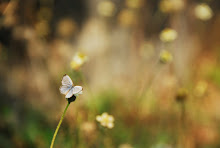
The lively walk was sprinkled with surprises. We met butterflies. We bumped into bird nest. We touched the ferns. It's hard to imagine a more funny way to learn the beauty of nature than playing with achenes attached to pappus of fine hair, watching them fly in the wind.
Which brings me to the scene with the glee of Jasmine pretending to eat the leaves of Ginkgo biloba before. She was one. It was another sunny afternoon, I remember, colder in temperature but warm with my kid's laughter. Jasmine resisted the temptation to laugh, when her mother's eyes bug out like a cartoon character's ("Wait wait, can we eat this leaf?"). You may call this acting silly. We think this is my baby's brand of humour.
In fact, there shouldn't be a time too early for children to have humour, and neither is there any age too late to play.
Saturday, March 31, 2012
Natural
Heard about René Redzepi? Not many do - even though, as the top chef running a restaurant voted the best in the world.
Redzepi hates artificial products. The Danish chef has never indulged in technological wizardry of molecular gastronomy; his restaurant served only foods produced within his region. To go with his philosophy of serving clients to taste the soil, Redzepi digs deeper into his immediate surroundings and comes up with dishes like a flowerpot stuffed with carrots and radishes.
To which a natural response might be "Ingenious" or "Genius." After reading the Time magazine profile article about this genius chef, the highlight of my weekend happened to be a literal experience of tasting the soil. It's an outdoor funfair without machines but replete with games made out of natural resources. My daughter was invited to play with hay, paint on leaves, and have fun with toys like pine cones or twigs. The more time we spent with the games, the more I started to wonder if the Toy"R"Us should be closed down. If Redzepi's restaurant is the Michelin-starred place to taste the soil, this funfair becomes the best one to feel the buzz of the nature.
Redzepi hates artificial products. The Danish chef has never indulged in technological wizardry of molecular gastronomy; his restaurant served only foods produced within his region. To go with his philosophy of serving clients to taste the soil, Redzepi digs deeper into his immediate surroundings and comes up with dishes like a flowerpot stuffed with carrots and radishes.
To which a natural response might be "Ingenious" or "Genius." After reading the Time magazine profile article about this genius chef, the highlight of my weekend happened to be a literal experience of tasting the soil. It's an outdoor funfair without machines but replete with games made out of natural resources. My daughter was invited to play with hay, paint on leaves, and have fun with toys like pine cones or twigs. The more time we spent with the games, the more I started to wonder if the Toy"R"Us should be closed down. If Redzepi's restaurant is the Michelin-starred place to taste the soil, this funfair becomes the best one to feel the buzz of the nature.
Friday, March 16, 2012
Penguin
I have long been an admirer of the behavioural ecologist. Animal behaviour, as most people know, is important but not easy to study.
I couldn't quote a better example than the recent white-flippered penguin story from the Science magazine. Those noisy penguins often squabble over their colonial territory, fighting with each other mano a mano. When it comes to fighting, the scientists were not particularly interested in whether it's a fist fight (of course, penguins can't) or flipper bash. Rather, the researchers paid attention to the triumph displays after the penguin's beating an opponent. The victory calls were recorded using a microphone and played back to bystander penguins. Each of the bystander penguins - there were 43 in all - were monitored when they listened to winner's victory call.
Monitoring bystander penguins' response is reputed to be difficult and unreliable - and the researchers had found it so - but it was solved by a trick: they temporarily swapped out the penguin eggs with an infrared egg. The fake eggs were used to count the brooding penguins' heart rate, as a barometer of stress levels.
As things turned out, male penguins were more stressed in the apparent presence of of a winner's vocal signature, and they were more likely to challenge an approaching loser by calling. The penguins' triumph display to make their victory known and build a "reputation" within the colony, of course, is not new, and certainly not unique to them. My guess is that birds do it, reptiles do it, mammals of all kinds do it. In fact, I myself made similar "victory dance" not long ago, when my colleague was proven wrong after arguing with me the diagnosis of a sick patient.
I couldn't quote a better example than the recent white-flippered penguin story from the Science magazine. Those noisy penguins often squabble over their colonial territory, fighting with each other mano a mano. When it comes to fighting, the scientists were not particularly interested in whether it's a fist fight (of course, penguins can't) or flipper bash. Rather, the researchers paid attention to the triumph displays after the penguin's beating an opponent. The victory calls were recorded using a microphone and played back to bystander penguins. Each of the bystander penguins - there were 43 in all - were monitored when they listened to winner's victory call.
Monitoring bystander penguins' response is reputed to be difficult and unreliable - and the researchers had found it so - but it was solved by a trick: they temporarily swapped out the penguin eggs with an infrared egg. The fake eggs were used to count the brooding penguins' heart rate, as a barometer of stress levels.
As things turned out, male penguins were more stressed in the apparent presence of of a winner's vocal signature, and they were more likely to challenge an approaching loser by calling. The penguins' triumph display to make their victory known and build a "reputation" within the colony, of course, is not new, and certainly not unique to them. My guess is that birds do it, reptiles do it, mammals of all kinds do it. In fact, I myself made similar "victory dance" not long ago, when my colleague was proven wrong after arguing with me the diagnosis of a sick patient.
Wednesday, March 14, 2012
Goldilocks
I've moved house for the umpteenth time. But this is the first time to move with a two-year-old baby.
Like other parents, we're inundated with myriad advice from everyone we know (and many people we don't know) on do's and don'ts, such as "don't pack the baby in a box." Ugh.
Like the three bears who venture in the story of "Goldilocks", we could never make prediction about what lies down the road. Will Jasmine get upset when we pack her purple dinosaur and fill the living room with boxes? What if she asks to go back home after moving into our new home? Will she love the new cot?
I knew she'd be excited, but I was afraid she'd be a little overwhelmed by the new changes, too. We unloaded the boxes in the new place, played with her, and waited. No, instead of whining, Jasmine simply loves her new castle. And honestly, I'm grateful for this. Seeing her makes me realize, I needn't have worried one jot about this particularly lovely girl.
Did I lose any box or my mind during the move? Not really, except my belt. The busiest moment for me was when I kept holding my sagging pants running after my daughter.
Like other parents, we're inundated with myriad advice from everyone we know (and many people we don't know) on do's and don'ts, such as "don't pack the baby in a box." Ugh.
Like the three bears who venture in the story of "Goldilocks", we could never make prediction about what lies down the road. Will Jasmine get upset when we pack her purple dinosaur and fill the living room with boxes? What if she asks to go back home after moving into our new home? Will she love the new cot?
I knew she'd be excited, but I was afraid she'd be a little overwhelmed by the new changes, too. We unloaded the boxes in the new place, played with her, and waited. No, instead of whining, Jasmine simply loves her new castle. And honestly, I'm grateful for this. Seeing her makes me realize, I needn't have worried one jot about this particularly lovely girl.
Did I lose any box or my mind during the move? Not really, except my belt. The busiest moment for me was when I kept holding my sagging pants running after my daughter.
Monday, March 5, 2012
Move
Count me a skeptic when it comes to moving house - and my skepticism is not ill-informed. I've moved more times than I have fingers.
Moving around, from the medical intern's hostel to any unoccupied room inside the hospital, is one of those skills you can never get better than me. Well, that was my nomadic way of living, if not necessarily my preferred one, and it turned out to be the cheapest way to stay near the hospital in my early years of work. I simply toted a bag with red, white and blue stripes. It's the size of a suitcase, zipped up without lock, shiny with repeated force of friction, blooming with self-sufficiency.
I settled down, finally, when I bought my home fourteen years ago. As the days went on, one bag with red, white and blue stripes could never be enough for me. I know I can buy more books when I got a book shelf at home. Um, buying books is like potato chips. You can't stop at just one. Obviously I can't move house at the snap of a finger after all these years. I metamorphose into a centipede who, when asked which foot it moved first, froze.
Moving around, from the medical intern's hostel to any unoccupied room inside the hospital, is one of those skills you can never get better than me. Well, that was my nomadic way of living, if not necessarily my preferred one, and it turned out to be the cheapest way to stay near the hospital in my early years of work. I simply toted a bag with red, white and blue stripes. It's the size of a suitcase, zipped up without lock, shiny with repeated force of friction, blooming with self-sufficiency.
I settled down, finally, when I bought my home fourteen years ago. As the days went on, one bag with red, white and blue stripes could never be enough for me. I know I can buy more books when I got a book shelf at home. Um, buying books is like potato chips. You can't stop at just one. Obviously I can't move house at the snap of a finger after all these years. I metamorphose into a centipede who, when asked which foot it moved first, froze.
Subscribe to:
Posts (Atom)